What month should trees be pruned in Florida?
For most shade trees in Florida, late winter (roughly December through February) is the best time to prune: before the spring growth flush and well ahead of hurricane season.
Most trees in Florida do best when they are pruned in late winter, while growth is slow and the weather is cool and dry. Some trees follow different rules, though, and so do some properties. Here is how we think about timing on yards around Clearwater.
The short answer: late winter for most trees
For most shade trees in Florida, prune in late winter. In practice that means December, January or February. Growth slows during these months, so the tree is not putting energy into new leaves and shoots. Cuts have time to start closing before the spring flush begins, usually somewhere around March.
Winter also tends to be the drier part of the year here. That matters because many fungal problems spread more easily in warm, wet weather. Bare or thinner canopies on some species make it easier to see the branch structure, so you can spot crossing limbs, weak forks and deadwood without guessing.
The second reason is hurricane season, which runs from June through November. Pruning in late winter gives a tree several months to settle before the first storms. A tree that has just had a heavy cut in July or August can respond with a burst of thin, weakly attached sprouts, and those are the branches that tend to snap in high wind.
What changes the answer on a real property
Late winter is the general rule. Your yard may have trees that don't follow it.
Flowering trees are the most common exception. If a tree blooms in spring, pruning it in winter can remove the buds that would have flowered. The usual advice is to prune these right after they finish blooming. Crape myrtles are different again because they flower on new growth, so late winter works well for them. Just avoid cutting them back to bare stubs, which leaves weak regrowth.
Oaks are worth a separate thought. Live oaks and laurel oaks are common in older Clearwater neighbourhoods, and both handle winter pruning well. Fresh wounds in spring can attract insects that carry disease, so many arborists avoid heavy oak cuts during the spring growth period.
Palms run on their own calendar. They are not true trees in the way an oak is, and they don't benefit from winter pruning. Leave green fronds in place over the cooler months, because they help protect the palm from cold. Trim dead or fully brown fronds and spent flower or seed stalks in late spring or summer instead. Cutting off healthy green fronds, sometimes called hurricane cutting, weakens the palm and does not make it safer in a storm.
Then there is the case where timing stops mattering. A cracked limb hanging over your roof, a branch resting on a service line, or a split trunk after a storm should be dealt with when you find it, whatever the month.
What you can check yourself
You can learn a lot from the ground with a pair of binoculars and a slow walk around each tree.
Look for deadwood first. Dead branches often have no leaves when the rest of the canopy is full, bark that is peeling or missing, or a grey, dry look. Then look for limbs that cross and rub against each other, which wears through the bark over time.
Check where branches join the trunk. A tight V-shaped fork with bark pinched into the joint is weaker than a wider U-shaped union. Look at the base of the tree for mushrooms, soft or hollow spots, or cracks in the soil on one side, which can mean the roots are shifting.
Finally, check clearance. Branches should be clear of your roof, gutters and walls, and kept back from the house so wind can't push them into it. Note anything over a driveway, pool cage or fence.
Small cuts on branches you can reach from the ground with hand tools are reasonable homeowner work. Cut just outside the collar, the slightly raised ring where the branch meets the trunk, and avoid leaving stubs.
When it needs a professional
Some jobs are not worth doing yourself. Anything that needs a ladder and a saw at the same time is a common cause of serious injury. So is any branch near an overhead line. Leave those to the utility or to a crew trained for it.
Call someone in when a limb is large enough that you can't control where it falls, when the tree leans toward the house, or when you see signs of decay at the trunk or roots. A good visit usually starts with a walk around the tree, a look at the canopy and the base, and a plain explanation of what we would cut and why. You should come away knowing whether the tree needs light trimming, structural work, or whether it is past saving.
In Clearwater and around Pinellas County, some trees are protected, and removing one may need permission from the city or county. If removal is on the table, it is worth checking the local rules before any work is booked.
How timing fits with the work we do
Most of our winter work is Tree Trimming: taking out deadwood, lifting canopies off roofs and thinning crowded trees so wind passes through them more easily before storm season. Booking that work in the cooler months is good for the tree and usually easier to schedule than the weeks just before a storm.
Sometimes a walk-around shows that a tree is too far gone to trim, for example a hollow trunk or a palm with a damaged crown. In that case Tree Removal may be the safer option, and the stump can be ground out afterward so the spot can be replanted or turned back into lawn.
If you are not sure whether your trees need attention this winter, a short look in person is usually enough to sort it out.
Related questions
Light trimming of deadwood or a branch that is in the way is fine in summer. Heavy pruning in summer is the problem, because it pushes out weak new growth just as hurricane season gets going. Save major structural cuts for late winter where you can.
Late spring or summer is the usual time to trim palms. Remove only fronds that are dead or fully brown, plus old flower and seed stalks. Leave green fronds in place, since the palm needs them for food and they help protect it from cold.
Yes, but do it early. Pruning in late winter or early spring gives the tree time to recover before June. Thinning a dense canopy and removing dead or weak limbs reduces what can break off, while topping or stripping a tree makes it weaker.
It is better to avoid heavy oak pruning during the spring growth period, when fresh wounds are more likely to attract insects that can spread disease. Late winter is the safer window for live oaks and laurel oaks. A broken or hanging limb should still be removed whenever you find it.
As a general rule, remove only what the tree actually needs: dead, damaged, crossing and poorly attached branches, plus anything touching the house. Taking off large amounts of live canopy in one visit stresses the tree and invites weak regrowth. If a tree needs a lot of work, spreading it over more than one season is often better.
Services
How we can help in Clearwater
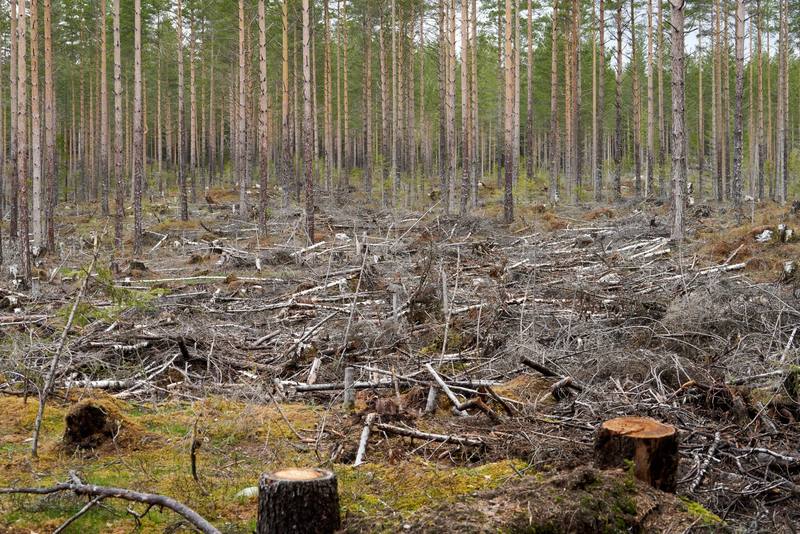
Stump Grinding
Stumps ground below grade so you can plant, sod or pave over the spot.
Learn more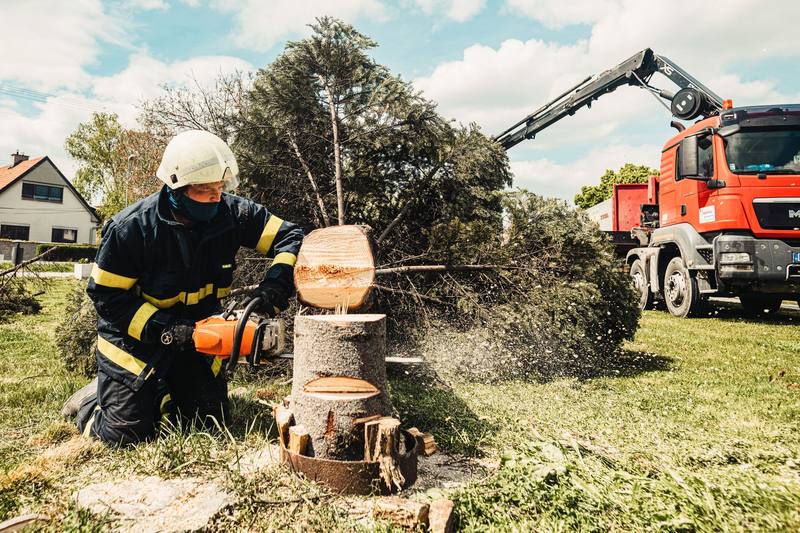
Stump Removal
Full stump and root ball extraction where a new structure, driveway or utility line is going in.
Learn more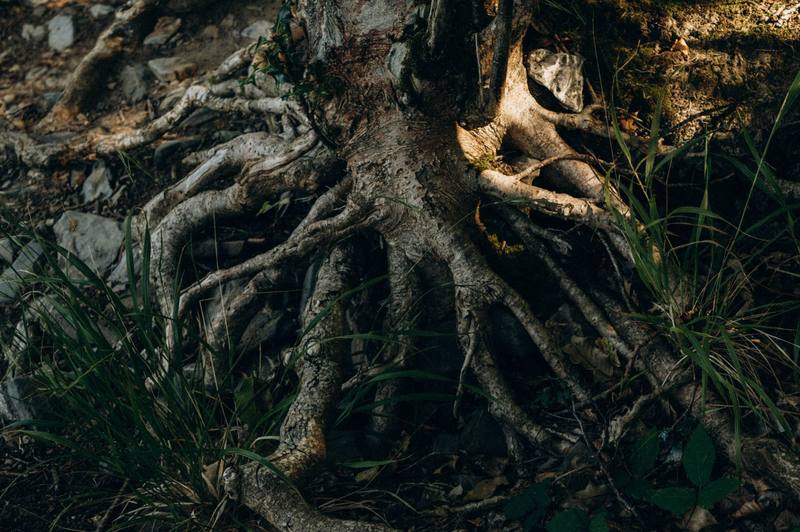
Root Grinding
Surface roots that lift walks, patios and lawns ground down and cleaned up.
Learn more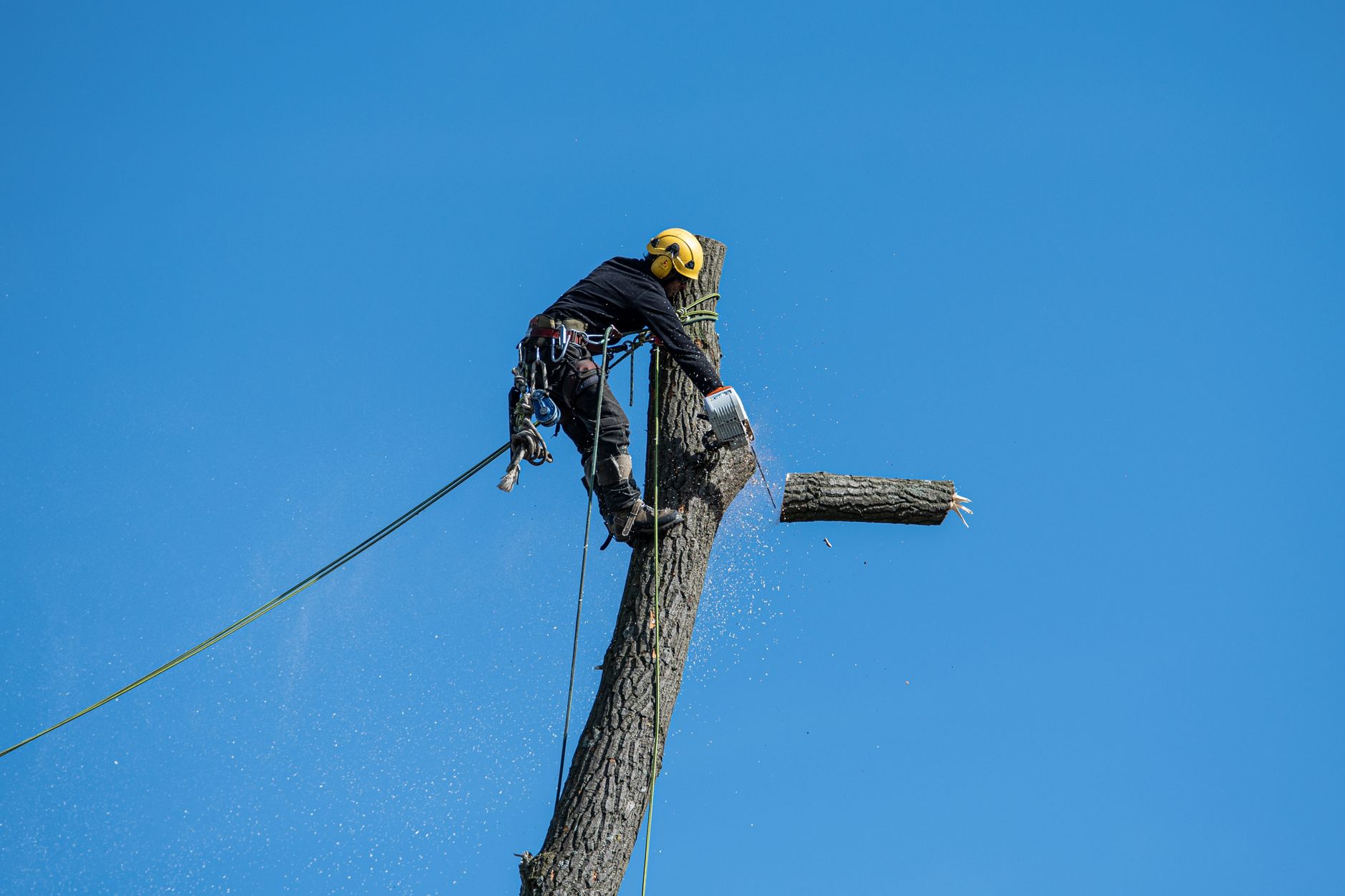
Tree Removal
Dead, leaning or in-the-way trees taken down in sections and hauled away.
Learn more
Tree Trimming
Crown cleaning, deadwood removal and clearance from roofs and lines.
Learn more
Lot Clearing
Brush, small trees and stumps cleared from lots and fence lines.
Learn more
Palm Tree Removal
We take down dead, diseased and unwanted palms around Clearwater and deal with the stump so you can use the ground again.
Learn more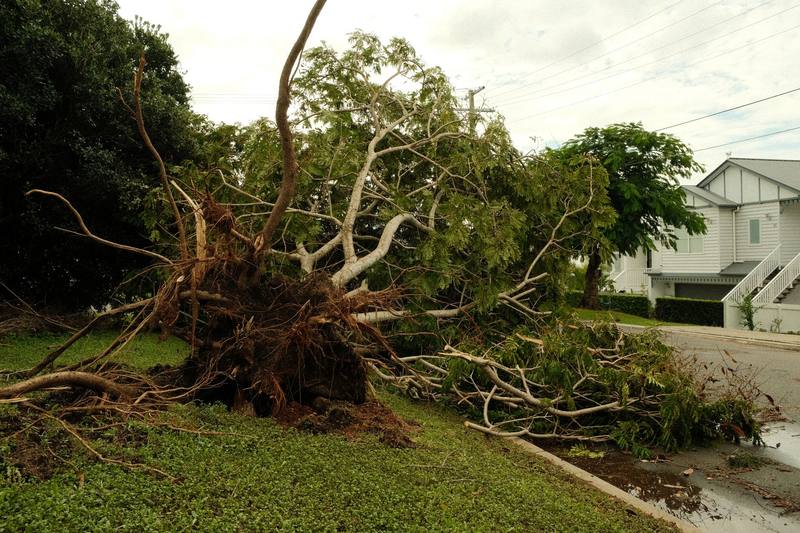
Storm Cleanup
Fallen limbs and uprooted trees cut, cleared and the stumps ground after a storm.
Learn more
Get Started
Send us a photo of the stump
Take a picture with something next to the stump for scale, tell us what you want in that spot, and we will get back to you with a quote. You can also call during business hours.