Stump Removal in Clearwater, FL
We take out the whole stump and its main roots, fill the hole and leave the ground ready for what comes next.
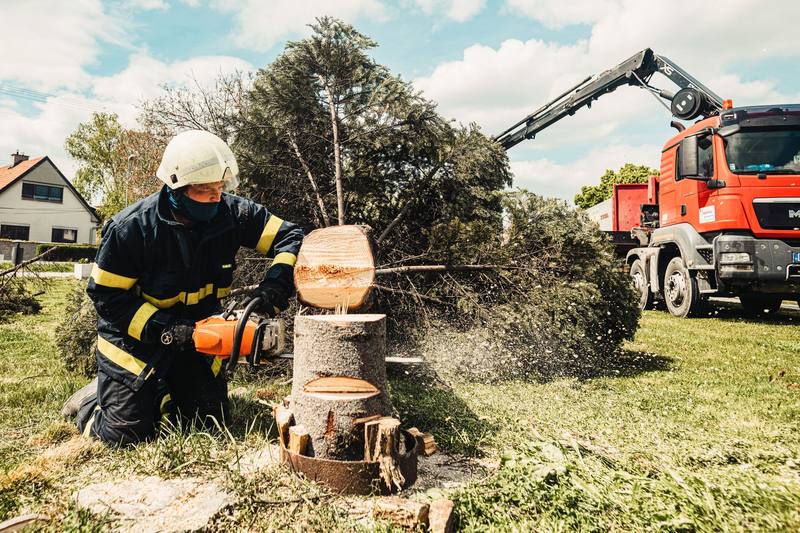
Stump removal means taking the stump out completely, root ball included, instead of grinding it down below the surface. It is more work than grinding, and it is not always needed. Here is how we decide which one makes sense for a stump in your Clearwater yard, and what the job involves.
Stump removal and stump grinding are not the same job
Grinding cuts the stump into chips a few inches below the soil line. The roots stay in the ground and break down slowly over the years. For most lawns and garden beds, that is all you need.
Removal goes further. We dig around the stump, cut the main lateral roots and lift out the root ball, so the space underneath is clear. The hole is bigger and so is the disturbance to the yard. In return, you get ground you can build on, dig into or plant in again without hitting a mass of old wood.
We offer both, and we will tell you plainly if grinding would do the job. Full removal is the right call in some places and overkill in others.
When a stump should come out completely
These are the situations where we usually suggest removal over grinding:
- You plan to put a pool, patio, shed slab, addition or driveway where the stump is.
- You want to plant a new tree in the same spot. Fresh roots struggle to grow through a buried root ball.
- The stump is close to a foundation, sidewalk or paver patio and its roots are already lifting or cracking them.
- The stump keeps sending up suckers after being cut, which some species do for years.
- The wood is rotting and you are seeing ants, termites or fungus around the base.
- You are regrading the yard and the old roots would sit in the way of the new grade.
What makes a stump hard to remove
Size matters, but it is not the whole picture. A wide oak stump with thick surface roots can take far longer than a taller stump from a smaller tree. Live oaks and laurel oaks, which are common around Clearwater, spread roots well out from the trunk, often just under the grass.
How long the tree has been down also counts. A fresh stump is solid and holds tight to the soil. One that has sat for a few years may be softer at the core but can have roots that have grown around pipes, edging or old fence posts.
Location is the other big factor. A stump in the middle of an open lawn is straightforward. One tucked against a fence, wedged between a house wall and an AC pad, or sitting over an irrigation line takes more hand digging and more care. Tell us about tight access when you call, including gate width, so we bring the right equipment.
When grinding is the better choice
If you just want the stump gone so you can mow, lay sod or put down mulch, grinding is usually enough. It is faster, it leaves a smaller footprint, and it does less damage to the lawn around it.
Grinding also makes sense when the stump sits near things roots have grown around, like a septic line or a shallow water main. Ripping out the root ball can pull those with it. In those cases we would rather grind and leave the deep roots alone than risk a broken pipe.
Palm stumps are a special case. Palms do not have the spreading woody roots that oaks do. Their root system is a dense mat of thin roots, and the stump itself is fibrous. Many palm stumps grind out cleanly, and full removal is often only needed when you are replanting in the same spot or building there.
What a stump removal visit involves
Every job is a little different, but most follow the same order:
- We look at the stump, the roots you can see and what is close by: the house, fences, beds, hardscape and irrigation heads.
- Utility lines are marked before any digging. In Florida, that means a locate request through 811, and we will not dig until the marks are in place.
- We expose the root flare by digging around the base, then cut the main roots with saws or a grinder.
- The stump and root ball are lifted out, or broken up and removed in pieces if they are large.
- We remove the wood, backfill the hole with soil, and rake the area level.
- You get a walk-through at the end so you can see what was done and where any roots were left in the ground.
What we leave behind
Stump removal in Clearwater: soil, water and yards
Much of Clearwater sits on sandy soil. Sand digs easily, which helps, but it also caves in. A deep hole around a big root ball needs care so the sides do not slump into the pit or toward a nearby slab.
The water table is shallow in many parts of Pinellas County, especially near the bay and the Gulf. After summer rain, a removal hole can fill with water partway down. We plan around the weather where we can, and we backfill promptly so you are not left with a standing pond in the yard.
Many homes here are older single-story houses on slabs with mature trees planted close to the walls. Their roots often run under driveways and walkways. When the stump is that close to concrete, we usually cut the roots at the edge of the slab and leave what is underneath, because pulling them can crack the concrete or leave a void.
Storm season adds its own work. After a hurricane or a strong summer storm, a tree that came down may have pulled part of its root plate out of the ground. Those half-lifted stumps can be easier to remove fully, but they can also be unstable, so we check them before anyone works near them.
After the stump is out
Backfilled soil settles over the next few weeks, especially after rain. A small dip is normal. Topping it up with soil once or twice before laying sod or planting gives you a level result.
If you are replanting a tree, give it some distance from the old hole where you can, and mix fresh soil into the backfill. If you are pouring concrete or setting pavers, let your contractor know a stump was removed there so they can compact the base properly.
If you are not sure whether your stump needs grinding or full removal, call us at (727) 010-0002 or send a few photos to info@stumpgrindingclearwater.com. We will tell you what we would do and why.
FAQ
Common questions about stump removal
Grinding chips the stump down below the soil and leaves the roots to rot in place. Removal digs out the stump and its main root ball, leaving clear ground underneath. Removal takes longer and disturbs more of the yard, so we only suggest it when you need the space clear.
Usually, yes. A buried root ball makes it hard for new roots to establish, and decaying wood can rob the soil of nitrogen. If you can move the new tree a few feet away, grinding the old stump is often enough.
It disturbs more ground than grinding, because we dig around the stump to reach the roots. We backfill and rake the area level when we finish. Expect to reseed or lay a little sod over the patch once the soil settles.
Often we can, but close to a slab we usually cut the roots at the concrete edge and leave what runs underneath. Pulling roots out from under a foundation or driveway can crack it or leave a hollow. We will look at it first and tell you what is safe.
Yes. We remove the stump, the larger roots and the wood waste, then fill the hole with soil. If you want to keep the wood chips for mulch, just ask before we start.
Get Started
Send us a photo of the stump
Take a picture with something next to the stump for scale, tell us what you want in that spot, and we will get back to you with a quote. You can also call during business hours.