Tree Trimming in Clearwater, FL
Careful pruning for oaks, palms and shade trees, covering roof clearance, deadwood removal and storm prep.
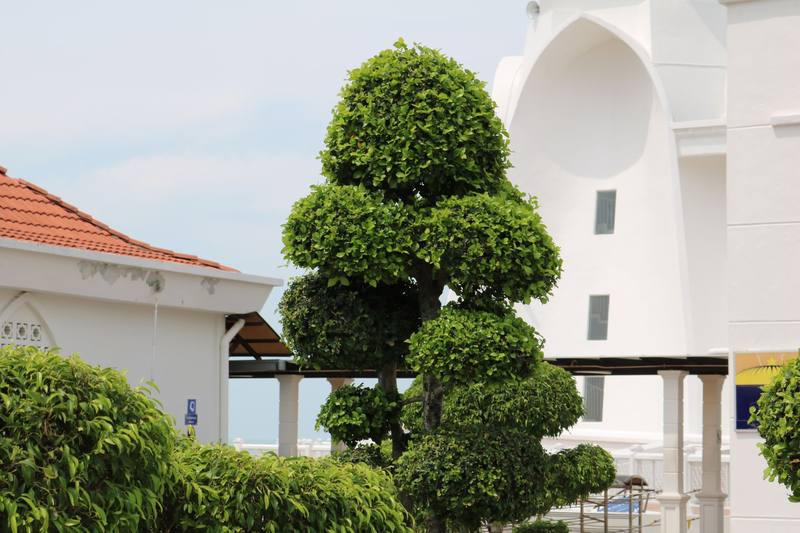
Trimming keeps a tree healthy and keeps its limbs off your roof, your pool cage and the line running to your house. We trim shade trees and palms around Clearwater with careful cuts and a full cleanup. If a tree is past trimming, we will tell you that plainly.
Signs a tree needs trimming
Most trees don't need cutting every year. They need it when something has changed. Walk the yard and look up from a few angles, ideally after a storm or when the light is behind the canopy. Watch for these:
- Dead branches with no leaves, or with bark peeling away, often high in the canopy of an oak.
- Limbs resting on or hanging over the roof, gutters or a screened pool enclosure.
- Branches rubbing against each other, which wears through the bark and lets rot in.
- A canopy so thick that the grass under it has died and the ground stays damp.
- Limbs growing toward the electrical line that runs to your house.
- Brown, hanging fronds on a palm, or seed pods heavy enough to dent a car when they fall.
What usually causes the problem
Fast growth is the first cause. Our long warm season and summer rain mean laurel oaks, live oaks and other shade trees add a lot of wood each year. Limbs reach the roof sooner than people expect, especially on trees that were planted close to the house when they were small.
Past cuts are the second. A lot of the trouble we see comes from earlier trimming done the wrong way. When a tree is topped, or the inside of the canopy is stripped so that only tufts remain at the ends of long limbs, it pushes out clusters of thin sprouts. Those sprouts are poorly attached and snap in wind. Flush cuts that remove the branch collar leave wounds the tree cannot close.
Storms and age are the third. Wind cracks limbs, and a cracked limb can hang in the canopy for months before it falls. Laurel oaks often decline from the inside as they get older, and their deadwood is hard to spot from the ground.
Trim or remove: how to decide
Trimming is the right call when the tree is basically sound and the problem is a handful of limbs: deadwood, clearance, crossing branches, or a canopy that has grown lopsided. Good pruning takes out what needs to go and leaves the tree's natural shape. As a rule we avoid taking more than about a quarter of the live canopy in one visit. A tree that loses too much leaf area gets stressed and grows back weaker.
Removal makes more sense in other cases. Look for a large cavity or soft wood at the base, mushrooms growing from the root flare, or a lean that is getting worse with the soil heaving up on the opposite side. Another case is a tree planted so close to the foundation that it would need cutting back every few months for the rest of its life. If we think removal is the better answer, we will say so and explain why, and the decision stays with you. Trimming usually costs less up front, but it is not always the better value.
With palms, the common mistake is cutting too much. Trimming off fronds that are still green, sometimes called a hurricane cut, takes away the leaves the palm feeds itself with. Over time it can leave a thin, narrowed trunk. We remove dead and drooping fronds, flower stalks and seed pods, and we leave the green crown alone.
What a trimming visit involves
We start by walking the property with you. We look at each tree from the ground and ask what you want from the job: more light, roof clearance, or less mess on the driveway. We also point out anything you may not have noticed. Before any work starts, you will know which limbs are coming off.
On the day, we set up to protect the lawn, beds and paving as much as the site allows. Big limbs over a roof, fence or pool cage get cut in sections and lowered, not dropped. We make each cut just outside the branch collar so the tree can seal the wound.
Cleanup is part of the job. We chip or haul away the branches, then rake and blow off the yard. If you want to keep firewood or mulch, tell us beforehand.
Limbs touching a power line are a separate matter. Contact your power provider first, because those lines are energized and the provider handles anything in contact with them. Once the line is clear, we can take care of the rest of the tree.
Timing, and what is different in Clearwater
Clearwater sits on the Gulf, with sandy soil, a high water table in many neighbourhoods, and a hurricane season that runs from June through November. Trees here have to stand up to strong wind on roots that are often shallow. A balanced, properly thinned canopy lets wind pass through. A tree carrying deadwood or a heavy, one-sided crown catches it.
Our advice is to get trimming done before the busy part of storm season. Waiting until a named storm is in the forecast means competing with everyone else who waited. Late winter and spring suit most shade trees. You can trim oaks for much of the year here, but heavy cuts during the hottest weeks of summer add stress.
Many Clearwater homes, especially in established neighbourhoods, have mature oaks growing close to the house with a screened pool enclosure beside them. Falling limbs and constant leaf drop are hard on screen panels and roofs, so clearance over those areas usually comes first. Spanish moss is common and mostly harmless. Heavy moss can hide dead branches, though, so we check what is underneath it.
Some local governments in Pinellas County regulate the removal or heavy pruning of certain trees. Routine trimming usually does not need a permit. If you are unsure whether your tree is protected, check with the city before major work. We are happy to go over it with you at the estimate.
Getting started
Call (727) 010-0002 or email info@stumpgrindingclearwater.com. Our hours are Monday to Friday, 7:00 AM to 7:00 PM, and Saturday, 8:00 AM to 5:00 PM. We do not take after-hours calls, so if a limb is down across a road or on a power line, call the utility or emergency services first.
When you get in touch, tell us roughly how many trees need work, what kind they are if you know, and what is bothering you about them. Photos help. If a stump from an old removal is still sitting in the yard, we can look at it on the same visit.
FAQ
Common questions about tree trimming
Most mature shade trees do well with a trim every few years, plus a check after any strong storm. Fast-growing trees close to the house may need clearance work more often. Palms usually need their dead fronds and seed pods removed once or twice a year.
We don't recommend topping. It makes the tree send out clusters of weak sprouts that break easily in wind, and it often starts decay in the trunk. If a tree has outgrown its space, selective reduction cuts or removal are usually better options, and we will explain both.
Yes, remove the dead fronds, coconuts and seed pods, because they can come loose in high wind. Leave the green fronds. A palm with a full green crown handles wind better and stays healthier than one cut down to a few fronds.
Your power provider should handle any branch touching a power line first, because the line is energized. Once the line is clear, we can trim the rest of the tree. Mention any nearby lines when you call so we can plan around them.
Routine trimming usually doesn't need a permit. Some trees are protected, though, and heavy pruning or removal can require approval. If you're not sure, check with the City of Clearwater before major work, and we can go over it during the estimate.
Yes. We chip or haul away the branches, then rake and blow off the yard before we leave. If you want to keep firewood or mulch, tell us beforehand and we will leave it where you want it.
Get Started
Send us a photo of the stump
Take a picture with something next to the stump for scale, tell us what you want in that spot, and we will get back to you with a quote. You can also call during business hours.