Tree Removal in Clearwater, FL
We take down dead, leaning and storm-damaged trees around Clearwater homes, and grind out the stump if you want it gone.
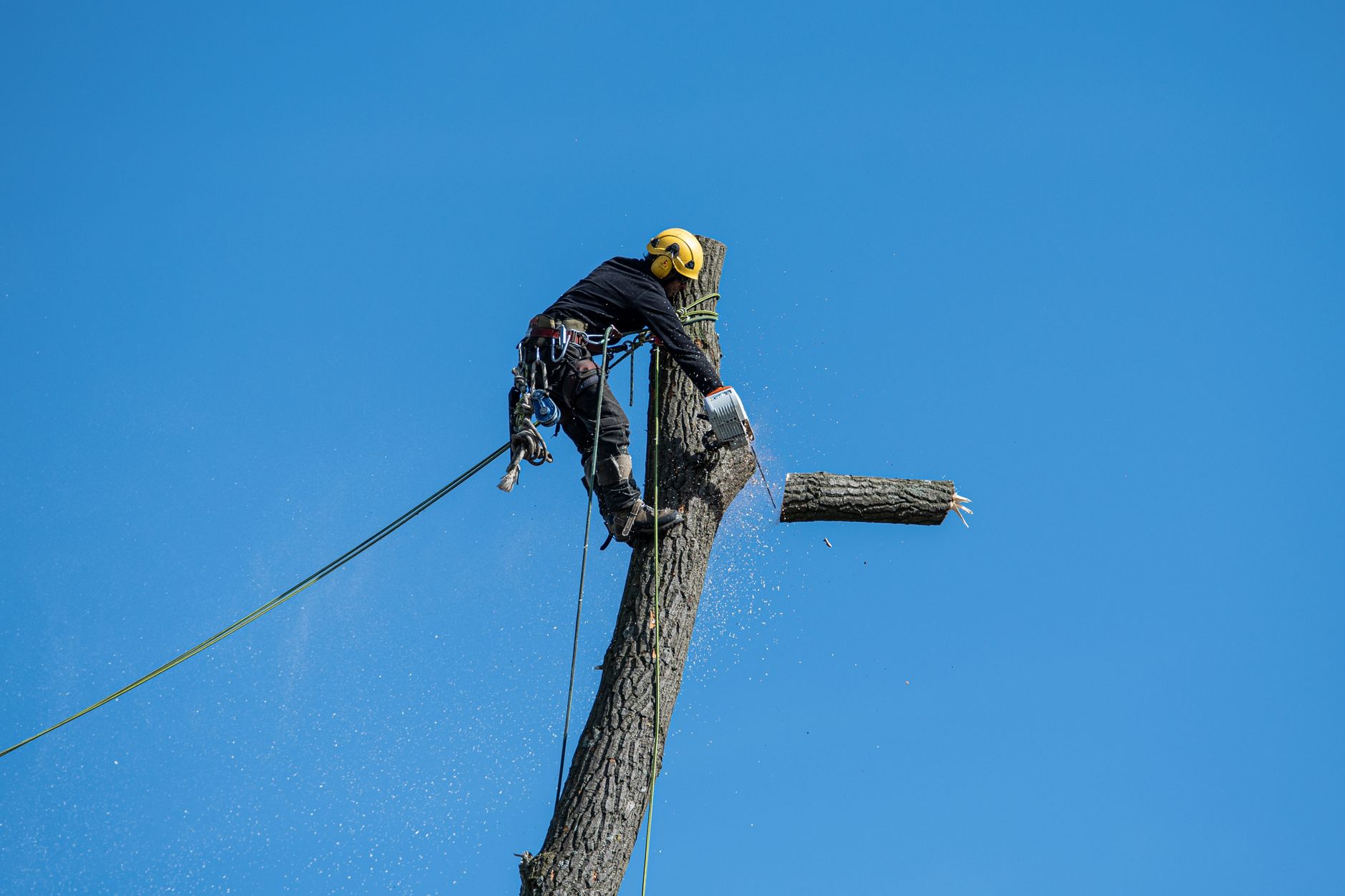
Taking a tree down close to a house is slow, careful work. We look at the tree first and tell you plainly whether it needs to come down. If it does, we take it down in sections where space is tight, and we clean up before we leave.
Signs a tree may need to come down
Most trees show warning signs before they fail. They are easy to miss from the ground, especially on a tall oak or pine you walk past every day. Walk slowly around the trunk and look up as well as down.
One of these signs on its own does not mean the tree has to go. Two or three together, on a tree that leans toward the house, usually mean it does.
- Mushrooms or hard shelf fungus growing at the base or on the trunk. These usually mean rot inside.
- Cracks or open seams running up the trunk, or bark coming away in large patches.
- A new lean, especially if the soil on the far side is lifting or cracked.
- Dead limbs in the top of the canopy, or a canopy that leafs out thinner every spring.
- A hollow sound when you knock on the trunk, or sawdust and small holes near the base.
- Roots that were cut in the last few years by a driveway, pool, irrigation or sewer job.
What usually causes trees to fail around Clearwater
Laurel oaks are common in older Clearwater neighborhoods. They grow fast and give good shade, but as they age they tend to rot from the inside where you cannot see it. A laurel oak can look full and green and still have a hollow trunk. Water oaks behave much the same way.
The soil matters too. Much of Pinellas County is sandy with a high water table, so roots tend to stay shallow and spread wide instead of going deep. After a week of heavy summer rain the ground can turn soft, and a strong gust can tip a whole tree, root plate and all. Leaning pines after a wet spell are a common call for that reason.
Construction damage is the slow one. Trenching for a new irrigation line, pouring a driveway or digging a pool can cut a large share of a tree's roots on one side. The tree often looks fine for a year or two, then starts dying back from the top.
Then there are storms. Tropical systems and ordinary summer thunderstorms load the canopy with wind and water. A split where two big limbs meet, or a broken branch left hanging in the crown, is a common result. These hanging limbs are a real hazard, because they can drop without warning days or weeks later.
When trimming is enough, and when it is not
We would rather trim a healthy tree than remove it. If the problem is one dead limb, branches rubbing the roof, or a canopy that has grown too dense, careful trimming usually solves it, and you keep the shade.
Removal makes sense when the trunk or roots are compromised: rot through a large part of the trunk, a crack that goes deep, a root plate that has started to lift, or a tree that is already dead. It also makes sense when a healthy tree is simply in the wrong place, such as tight against a foundation, lifting a slab, or growing into the lines.
We will tell you what we see and why. If the call is close and the tree matters to you, it can be worth getting an arborist's opinion before you decide. A tree that took decades to grow is worth a second look.
What a tree removal visit involves
We start by looking at the tree and the space around it: what it could hit, how we get equipment in, and where the wood will go. Then we give you a quote for the work.
On the day of the job, the work usually goes like this:
- We mark out a safe area and ask you to move what can be moved, such as patio furniture, grills, planters and cars.
- Where there is open ground, a tree may come down in one piece. Near a house, fence or pool cage, we take it down in sections and lower the heavy pieces on ropes instead of letting them fall.
- Branches go through a chipper. The trunk is cut into lengths. Tell us if you want any wood kept for firewood or a project.
- We rake and blow the area when we are done, so you are not left with a yard full of sawdust and twigs.
Things to tell us before we come
Things specific to Clearwater properties
Many Clearwater homes are single-story houses on compact lots, often with a screened pool cage and a neighbor's fence a few feet from the trunk. That means most removals here are done in sections, not dropped whole. It also means access can be tight, so it helps to know the width of your side gate before we visit.
Trees growing into overhead lines are a separate matter. Lines that carry power to the street are the utility's responsibility, and the utility may need to be involved before any work near them. We will tell you if we think that applies to your tree.
Local rules matter as well. The City of Clearwater and Pinellas County both have rules about removing some trees, and a permit may be needed depending on the type and size of the tree and where you live. Neighboring cities such as Dunedin and Largo have their own rules. Check with your city before the work is booked so there are no surprises.
Timing is worth thinking about. Hurricane season runs from June through November. If you already know a tree is weak and leaning toward the house, it is better to deal with it in the quieter months than to wait and hope it rides out a storm.
After the tree comes down
When a tree is removed, the stump is usually cut close to the ground and left in place. Stump grinding is our main work, so we can grind it out on the same visit if you want the ground cleared for grass, a garden bed or a new slab. Mention it when you ask for a quote so we bring the grinder.
The grindings can be raked back into the hole as fill or spread as mulch. Over the next few months the area will settle a little, and a bag or two of topsoil is usually enough to level it before you plant. If the tree was a palm, the process is a little different, and our palm tree removal page covers that.
FAQ
Common questions about tree removal
Sometimes. The City of Clearwater and Pinellas County have rules about removing certain trees, and whether a permit is needed depends on the tree and your location. Check with your city before the work is scheduled.
Yes. When there is no room to drop a tree, we take it down in sections and lower the heavy pieces with ropes. It takes longer, but it keeps the weight away from your roof, fence and screen enclosure.
Only if you want it to be. We can grind the stump on the same visit, so tell us when you ask for a quote. Underground utilities need to be marked through 811 before grinding.
Yes, fallen and storm-damaged trees are part of our storm cleanup work. We do not offer after-hours service, so we schedule these jobs during our normal hours, Monday to Saturday. If a tree is on a power line, call the utility first.
Branches are chipped and the trunk is cut into lengths. We can haul it away or leave some for you. Let us know before we start which you would prefer.
Get Started
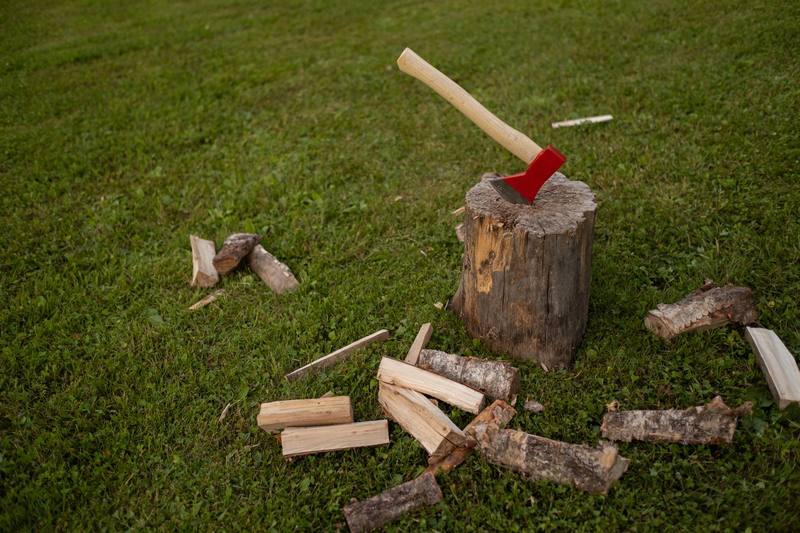
Send us a photo of the stump
Take a picture with something next to the stump for scale, tell us what you want in that spot, and we will get back to you with a quote. You can also call during business hours.