Palm Tree Removal in Clearwater, FL
We take down dead, diseased and unwanted palms around Clearwater and deal with the stump so you can use the ground again.
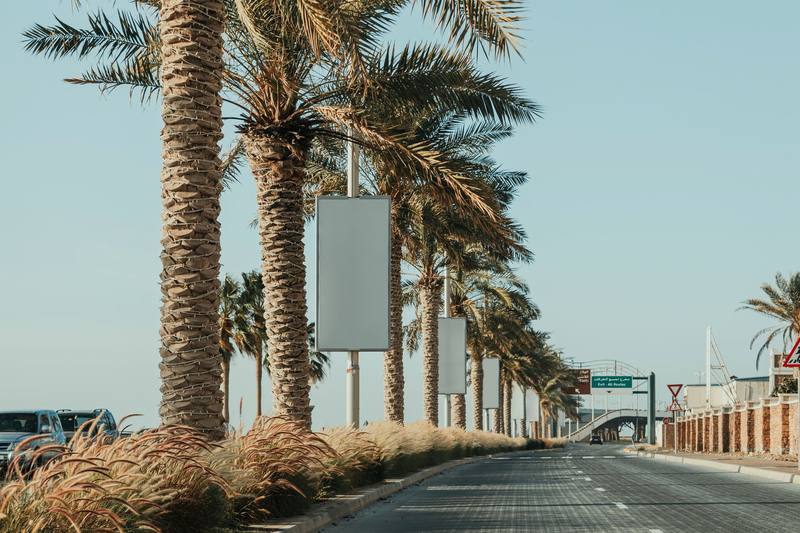
Palms die in a different way from other trees. A dying palm near a house or pool should come down before it drops fronds or snaps. We look at the palm, tell you plainly whether it needs to come out or only needs a trim, and quote the removal and the stump work together.
Signs a palm needs to come out
A palm grows differently from an oak or a maple. All of its new growth comes from a single bud at the top of the trunk, sometimes called the heart. If that bud dies, the palm cannot grow a new one and it will not recover. That makes some decisions simpler than they are with other trees.
Here is what we look for when a homeowner in Clearwater asks whether a palm should stay:
- The newest frond in the centre, called the spear, is brown or wilted, or it pulls out with a light tug.
- The lower fronds are browning from the bottom up, often with a bronze or rusty colour, faster than new ones grow in.
- There are shelf-shaped growths, or soft wood that sounds hollow, near the base of the trunk.
- The trunk narrows sharply partway up. This shows the palm went through a long stretch of poor health.
- The palm has a lean that got worse over a season, or the soil has cracked on one side of the base.
- The palm is too close to the roof, a pool cage or a power line and keeps dropping heavy fronds or seed stalks.
What usually kills palms around Clearwater
Most of the palms we are asked to remove are dying from one of a few causes. Once you know which one it is, you can decide what to do about the palms that are still standing.
Lethal bronzing
Ganoderma butt rot
Fusarium wilt
Nutrient problems and cold
Trim or remove
Plenty of palms only need a trim. If the spear is green, the trunk is solid and the new fronds look healthy, removing the dead fronds and seed stalks is usually enough. We do not recommend cutting a palm back to a few upright fronds, the shape people call a hurricane cut. Green fronds feed the palm, and stripping them off weakens it and can make the trunk grow thinner.
Removal makes sense when the bud is dead or dying, when the palm has butt rot or lethal bronzing, when the trunk is damaged or leaning toward the house, or when the palm has outgrown its spot. A Washingtonia planted beside a pool years ago can end up far taller than anyone expected and drop fronds into the water every week. Sometimes the honest answer is that the palm is in the wrong place.
If you are not sure, we will tell you what we see. If a trim is enough, we will say so.
What a palm removal visit involves
Before we quote, we look at how tall the palm is, what sits underneath it and how we can reach it. A pygmy date palm in an open front yard is a short job. A tall Canary Island date palm squeezed between a lanai screen and a neighbour's fence takes more planning.
- We check the drop zone for power lines, roof edges, pool enclosures, irrigation heads and anything else that could be hit.
- The fronds and seed stalks come off first. This makes the trunk lighter and easier to control.
- Tall palms near buildings are usually taken down in sections from the top. A palm with clear space around it can sometimes be felled in one piece.
- The trunk is cut into manageable lengths, and the cleanup and debris are handled as agreed in your quote.
- Then we deal with the stump, either grinding it or removing it, depending on your plans for the spot.
The palm stump
Palm stumps are different from hardwood stumps. A palm has no large tap root. It holds itself up with a dense mass of thin roots, often called the root ball, spread through the top layer of soil. The stump itself is fibrous rather than solid wood.
Most single-trunk palms will not sprout again from the stump once the top is gone, so you do not have to fight new shoots the way you might with some other trees. What matters is what you want to do with the ground.
- Stump Grinding takes the trunk down below the soil line and leaves fibrous chips mixed into the soil. This is the usual choice if you plan to lay sod or plant a bed in that spot.
- Stump Removal takes out the root ball as well. It makes sense if you are putting another palm in the same hole, laying pavers or pouring a slab.
Palms, storms and Clearwater homes
On the Gulf coast, most people think about palms in terms of storms. A healthy, well-rooted palm with its fronds left on usually handles wind fairly well. The palms that cause damage are usually the ones already weakened by rot, disease or a lean. Heavy dead fronds and fruit clusters left on the tree can also be thrown by strong wind.
If a palm worries you, deal with it before hurricane season starts, not on the day a storm gets a name. After a storm, our Storm Cleanup work covers palms that have snapped or fallen, but a planned removal is calmer and usually simpler.
Many Clearwater homes have pools, screened cages and narrow side yards, and older neighbourhoods often have mature palms planted close to the house. These are the yards where careful sectional work matters most. Before you remove a large palm, check with the city. Clearwater and the cities nearby have tree rules that can apply to some removals, and the city has the final word.
We work in Clearwater and nearby towns, including Dunedin, Largo, Palm Harbor and Safety Harbor. Call (727) 010-0002 or use the form to get a quote.
FAQ
Common questions about palm tree removal
Most single-trunk palms, such as cabbage, queen and Washingtonia palms, will not grow back once the top is cut off, because all their growth comes from a single bud. Clumping palms can send up new shoots from the base. If you have a clumping palm, taking out the root ball is the surer way to stop it coming back.
If the spear, the newest frond in the centre, is dead or pulls out easily, the palm usually cannot recover. A palm with brown lower fronds and a healthy green spear may only have a nutrient problem or cold damage. We can take a look and tell you which one you have.
Not always. A palm stump will rot down on its own, but it takes a while, and in the meantime it gets in the way of mowing and planting. Grinding it below the soil line means you can use the spot straight away.
Usually, yes. Palms near buildings are normally taken down in sections from the top, so nothing heavy falls onto the screen or the roof. We look at the space and how we can get in before we give you a quote.
It depends on the palm, the property and the city. Some removals fall under local tree rules, so check with the City of Clearwater, or whichever city you live in, before work starts. We can tell you what we know, but the city's answer is the one that counts.
Get Started
Send us a photo of the stump
Take a picture with something next to the stump for scale, tell us what you want in that spot, and we will get back to you with a quote. You can also call during business hours.